

The way universities teach has changed dramatically in the 21st century. Gone are the days when a professor simply lectured to rows of passive students for an hour. Today, the world’s top institutions — from MIT and Harvard to Stanford, Oxford, and NUS Singapore — are pioneering innovative, evidence-based pedagogical approaches that put learners at the centre of the educational experience. These modern techniques are not just trends; they are reshaping how knowledge is constructed, how skills are built, and how students are prepared for a fast-changing world.
In this blog, we explore the most impactful modern learning and teaching techniques adopted by top universities globally — and why Indian educators would benefit greatly from embracing them.
1. 🔄 The Flipped Classroom
Universities using it: Harvard University, Stanford University, MIT, University of Queensland

In a traditional classroom, students listen to lectures during class and do homework at home. The Flipped Classroom reverses this: students watch pre-recorded video lectures or read content before class, and class time is reserved for interactive discussions, problem-solving, and collaborative projects. Harvard’s Eric Mazur pioneered this through “Peer Instruction.” Research consistently shows flipped classrooms improve student engagement and academic performance — especially in STEM subjects.
“The flipped classroom isn’t about technology. It’s about time — using class time more wisely.”
— Eric Mazur, Harvard University
2. 🧩 Problem-Based Learning (PBL)
Universities using it: McMaster University (pioneer), Harvard Medical School, Maastricht University, NUS Singapore, University of Delaware
Problem-Based Learning (PBL) places students in real-world, complex problem scenarios they must solve collaboratively before being formally taught the theory. Instead of starting with lectures, students start with a problem — and in the process of solving it, they identify what they need to learn. McMaster University introduced PBL in medical education in the 1960s, and Harvard Medical School’s curriculum is largely PBL-based. Students develop critical thinking, teamwork, communication, and self-directed learning skills that are vital in professional practice.
3. 💡 Active Learning
Universities using it: MIT (TEAL Classrooms), University of Minnesota, University of Michigan, Cornell University

Active Learning requires students to do something with the material — think, discuss, solve, create, apply — rather than passively receive it. MIT’s Technology-Enabled Active Learning (TEAL) project redesigned large physics lecture halls into collaborative workspaces where students work in teams on experiments and simulations. Failure rates in introductory physics dropped by over 50%. Active learning techniques include think-pair-share, minute papers, concept mapping, case studies, and simulation-based learning.
4. 🌐 Blended Learning
Universities using it: Harvard Business School (HBX), Georgia Tech (Online MS in CS), Arizona State University, University of Edinburgh
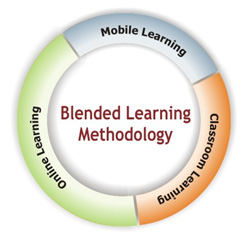
Blended Learning (hybrid learning) combines face-to-face instruction with online digital learning. Harvard Business School’s HBX platform delivers blended business education to thousands worldwide. Georgia Tech’s pioneering Online MS in Computer Science (OMSCS) blends video lectures, online projects, and campus intensives. Arizona State University has been ranked #1 in US innovation for multiple years, largely driven by its blended curriculum model.
5. 🤝 Peer Learning & Collaborative Learning
Universities using it: Oxford University (tutorial system), Cambridge University, Stanford d.school, MIT

Oxford and Cambridge’s distinctive tutorial system — small group or one-on-one sessions where students present and defend their thinking to tutors and peers — is at the heart of Oxbridge education. Stanford’s d.school structures all courses around collaborative team projects, bringing together students from different disciplines to solve human-centred design challenges. Research shows peer learning increases comprehension, retention, and student confidence — because teaching others is one of the most effective learning strategies.
6. 🎓 Project-Based & Experiential Learning
Universities using it: MIT (UROP), Stanford (Stanford Ignite), Olin College of Engineering, Northeastern University (Co-op)
Project-Based Learning (PjBL) and Experiential Learning immerse students in real, extended projects addressing authentic challenges in industry, communities, or research. MIT’s Undergraduate Research Opportunities Program (UROP) gives thousands of students the chance to participate in cutting-edge research from their first year. Northeastern University’s legendary Co-op Program integrates six-month industry placements into every degree, giving students up to 18 months of professional experience before graduation.
7. 💻 MOOCs & Technology-Enhanced Learning
Universities using it: MIT & Harvard (edX/MITx), Stanford (Coursera), Yale, University of Michigan
When MIT launched MITx in 2011 and Harvard joined to create edX, it marked a turning point in global education access. Beyond MOOCs, top universities now integrate adaptive learning technologies, AI-powered tutoring systems, learning analytics, virtual labs, and immersive simulations. Carnegie Mellon University is globally recognised for its AI-powered cognitive tutors that adapt to individual student learning patterns in real time.
8. 🎮 Gamification in Education
Universities using it: University of Michigan, New York University (NYU), MIT Media Lab, Karolinska Institute (Sweden)
Gamification applies game design elements — points, badges, leaderboards, challenges, and rewards — to educational contexts to boost motivation. NYU’s Game Center researches how games can be used as learning tools across disciplines. The MIT Media Lab explores “hard fun” — designing challenging, immersive, game-like learning experiences for complex STEM concepts. Studies show gamification significantly increases student participation, completion rates, and knowledge retention.
9. 🧠 Inquiry-Based & Socratic Learning
Universities using it: Harvard Law School (Case Method), Oxford (Tutorials), Liberal Arts Colleges
The Socratic Method — asking probing questions to stimulate critical thinking — is a cornerstone of Harvard Law School’s legendary teaching approach, where students are cold-called to defend their reasoning from the first day of class. Top liberal arts colleges use Socratic Seminars extensively — structured discussions where the teacher asks questions rather than gives answers, building analytical rigour, oral communication, and the ability to reason under uncertainty.
10. 🌍 Interdisciplinary & Cross-Disciplinary Learning
Universities using it: MIT (Media Lab), Stanford (d.school), Yale (Professional Schools), Sciences Po (Paris)
The most complex 21st-century challenges — climate change, AI ethics, urban poverty — cannot be solved by one discipline alone. MIT’s Media Lab brings together artists, engineers, neuroscientists, and social scientists to work on projects that don’t fit into any single department. Stanford’s d.school accepts students from every graduate school and unifies them through design thinking. Sciences Po integrates political science, economics, sociology, and law across all programmes.
📊 Traditional vs. Modern Teaching: A Quick Comparison
| Aspect | Traditional | Modern |
|---|---|---|
| Role of Teacher | Information deliverer | Facilitator / Coach |
| Role of Student | Passive listener | Active co-creator |
| Assessment | End-of-term exams | Continuous, project-based, portfolio |
| Classroom Design | Fixed rows, lecture format | Flexible, collaborative, tech-enabled |
| Content | Discipline-specific, siloed | Interdisciplinary, problem-centred |
| Feedback | After exams | Ongoing, formative, peer-driven |
| Focus | Memorisation | Competency & outcomes |
🇮🇳 What Can Indian Institutions Learn?
India’s National Education Policy (NEP) 2020 explicitly calls for multidisciplinary education, experiential learning, critical thinking, and outcome-based education (OBE). Institutions implementing NBA and NAAC accreditation frameworks are already being asked to demonstrate these modern teaching approaches through their CO-PO mapping, rubrics, and attainment data. You don’t need a Harvard-sized budget to start — flipping your classroom requires only a smartphone and a willing mind. Problem-based learning needs only a well-crafted question. The transformation begins with a shift in mindset: from teaching as content delivery to teaching as the design of learning experiences.
The world’s best universities succeed not because of expensive buildings, but because they’ve relentlessly asked: how do people actually learn best? That question is available to every educator — everywhere.
📚 Further Reading & Resources
- MIT Teaching + Learning Lab — High-impact teaching strategies
- Stanford d.school — Design Thinking resources and courses
- edX (Harvard & MIT) — Free courses from top universities worldwide
- Coursera — University courses on pedagogy and learning science
📝 This blog is part of RE-Learning’s ongoing series on modern education practices. Share it with fellow educators navigating the exciting challenge of reimagining higher education.
